
Notes from the workshop.
Local-first personal AI, architecture, and the industry moves that keep confirming the bet. Written in Hong Kong.
Local-first personal AI, architecture, and the industry moves that keep confirming the bet. Written in Hong Kong.

Jake Saper at Emergence Capital just published a thesis piece: value in enterprise AI is migrating from the model layer to the data plus workflows built on top. He is describing, for the enterprise, the same structural shift Ostler is built on for the individual. The personal unbundling is next. Here is what it looks like when the value in AI stops sitting inside the model and starts sitting in the memory of you.
On 24 July, Satya Nadella, Jensen Huang, and thirty-plus other technology leaders signed an open letter in support of open-weight AI models. Packy McCormick framed it as commoditising the complement. What that misses: open-weight is the necessary condition for personal AI to run on your own machine at all. Yesterday’s letter is the supply-chain agreement Ostler quietly needed.

Employers, ad platforms and data brokers all keep a durable, machine-readable memory of you, and not one of them is for you. A memory that is actually useful has to over-save, and that same property makes it monstrous in someone else’s hands and liberating in your own. The only variable that flips it is who holds it. Mira Murati now argues the same from the inside.
A well-funded lab just put the most credible names in AI behind the idea that models should learn from your context. We agree. The only question left is where that memory lives, and who controls it – and for a person, the honest answer has to be local.

Two independent pieces, one from a creator-economy newsletter and one from a developer publication, land on the same diagnosis. Nobody has won the personal AI agent race. The bottleneck is not the model and it is not the hardware; it is whether the agent has access to the operator’s actual data. That is the problem Ostler is built around.
“Local-first” has become a polite lie in personal AI. Most products marketed as local actually keep the heavy lifting in the cloud, with the cache on your device. Ostler runs every component on a single Mac, the one the customer already owns. This is what local-first looks like when you build it honestly.

Kenan Saleh of a16z Speedrun sketches the next wave of AI: agents that continuously monitor context, predict what matters, and take action before being asked. He names two products doing it; both are cloud. Here is what observe-to-act looks like when the data never leaves the customer’s machine.
The New York Times reports corporate lawyers turning into bouncers at virtual meetings, kicking out cloud AI note-takers. The privilege risk is architectural, not editorial. Here is what changes when the note-taker runs on the customer’s own machine, with WhisperKit on-device transcription and a tamper-evident consent log.
Apple’s App Store privacy nutrition label is the only privacy disclosure surface in tech with structural enforcement. The Ostler iOS app declares zero tracking and no linked data, because there is no Ostler server to link data to. The architecture writes the label, not the lawyer.

A class action filed in California this month alleges that chatbot conversations have been routed through advertising trackers. The argument lands because chatbots are now the most intimate technology many people use. Privacy by policy cannot prevent this kind of leak. Only architecture can.
Three completely different vantage points have converged on the same architecture for personal AI over the past six months. Singapore's Foreign Minister using it daily on a Raspberry Pi. Andrej Karpathy describing it on stage. A founder shipping it to customers. They had no reason to agree. They did anyway.
Apple is about to concede the category. The fact that the most privacy-obsessed consumer-tech company on the planet cannot build a personal AI locally tells you exactly how large the market is, and why the local-first bet is the contrarian trade now being demanded.
On 21 April 2026, OpenAI released Privacy Filter as open weights under Apache 2.0. It runs locally, detects eight categories of PII, and slots directly into Ostler's ingest, diagnostic, and pre-flight pipeline. Here is why, and what the release signals.
On Dwarkesh Patel's podcast on 17 October 2025, Andrej Karpathy argued that a small reasoner with external memory beats a 1.8-trillion-parameter monolith. That is the architecture Ostler has been running since late 2025. Here is what it means for local-first personal AI.
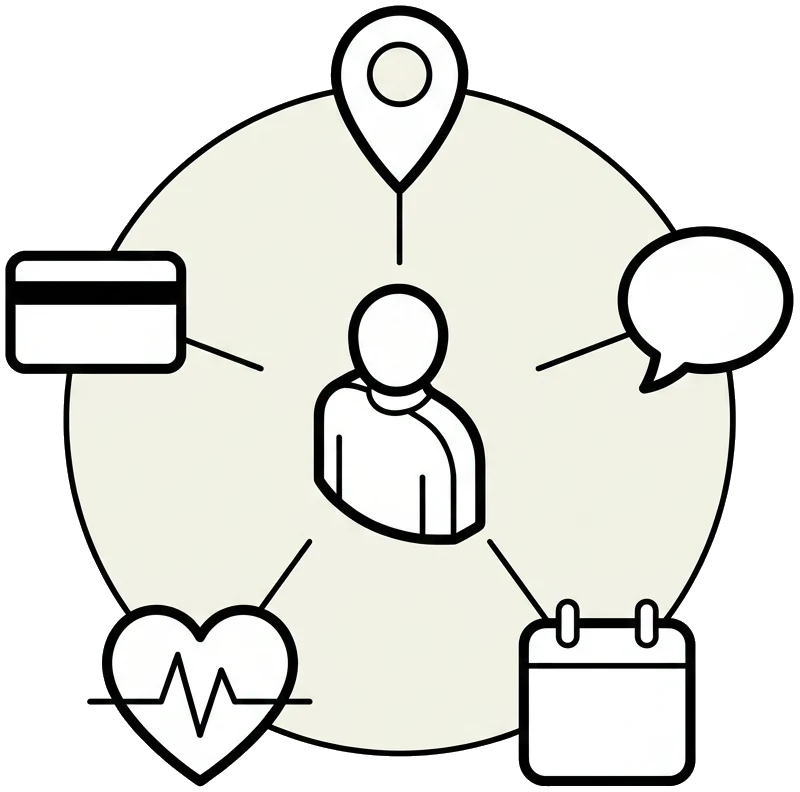
After twenty years of giving my data to tech companies, I built a personal knowledge graph that runs entirely on a Mac Mini. This is the story of how it got here, and why it matters that nothing leaves the house.